HOW2POWER TODAY |
 |
|
ISSUE: February 2010 | |
To ensure receipt of your newsletter, please add david@how2power.com to your address book. | |
 |
IN THIS ISSUE:From the Editor’s Desk
Reverse-Current Phenomenon in Synchronous
Rectifiers
An Overview and Simulation of DC-DC-AC
and Z-Source GridConnected Inverters
Small-signal Analysis, Modeling and Design
of a Synchronous Buck-Converter in
Voltage-Mode Control
Case Study: Flared Pin Fin Heat Sink Keeps LED
Light Burning Brightly
New Power Products Power Supply Jobs & Technology
Kudos2
From the Editor's Desk David G. Morrison
Editor, How2Power TODAY
|
|
 When we talk about innovation in power electronics, we often focus on what’s inside the power converter—new components, new control techniques, new circuit designs and so on. But what drives that innovation is often outside the box—either at the load or at the power/energy source. This point is illustrated by two of the articles appearing in this issue. In their design feature on grid-connected inverters, researchers at Wright State University preface their work by mentioning some increasingly important power sources that require inverters. Their list includes batteries, fuel cells, capacitors/ultracapacitors, and solar cells—a virtual who’s who of alternative dc power technologies that should drive inverter development for years to come. Meanwhile, in the Power Supply Jobs and Technology article, an increasingly important load—lighting, particularly LED lighting—comes into play. Here, the technology in question is not only driving power supply development but also engineering opportunity. All of this is simply a way of observing that most real-world discussions about power conversion begin and end with the application. Expect to find traces of this theme throughout this issue, in features on reverse-currents in synchronous rectifiers, voltage-mode control for buck converters, the LED heat sink case study as well some of the power product stories. When we talk about innovation in power electronics, we often focus on what’s inside the power converter—new components, new control techniques, new circuit designs and so on. But what drives that innovation is often outside the box—either at the load or at the power/energy source. This point is illustrated by two of the articles appearing in this issue. In their design feature on grid-connected inverters, researchers at Wright State University preface their work by mentioning some increasingly important power sources that require inverters. Their list includes batteries, fuel cells, capacitors/ultracapacitors, and solar cells—a virtual who’s who of alternative dc power technologies that should drive inverter development for years to come. Meanwhile, in the Power Supply Jobs and Technology article, an increasingly important load—lighting, particularly LED lighting—comes into play. Here, the technology in question is not only driving power supply development but also engineering opportunity. All of this is simply a way of observing that most real-world discussions about power conversion begin and end with the application. Expect to find traces of this theme throughout this issue, in features on reverse-currents in synchronous rectifiers, voltage-mode control for buck converters, the LED heat sink case study as well some of the power product stories.
|
HOW2POWER EXCLUSIVE DESIGN ARTICLES 
|
Reverse-Current Phenomenon in Synchronous Rectifiers
by Suresh Kariyadan, International Rectifier, El Segundo, Calif.
When a diode is replaced with MOSFETs for rectification, one important difference between the diode and MOSFET is that the diode is a unidirectional device whereas the MOSFET is a bidirectional device. No matter how the converter operates, the diode can block the reverse current while the MOSFET cannot. Synchronous rectification can force continuous current in the output choke and current becomes negative under no-load and light-load conditions. In addition to reducing efficiency at light load, the reverse current can cause a hard failure in a power supply. This article discusses how converter operating conditions create reverse currents and presents techniques for controlling these currents to prevent hard failures in nonisolated buck converters as well as isolated dc-dc converters where synchronous rectification is employed on the secondary side. Read the full story...
|
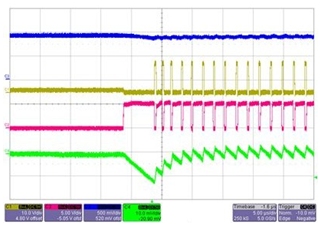 Reverse current can occur during turn off of the power supply with no-load
or light-load condition, pre-bias turn on (shown here), shutting down of the
power supply during an OVP or OCP condition or during a dynamic load change |
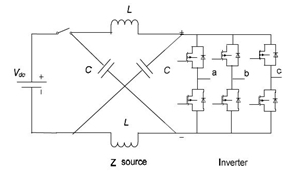
The Z-source inverter incorporates the boosting and the
inversion functions into a single stage, reducing system complexity,
increasing efficiency and saving cost and volume. |
An Overview and Simulation of DC-DC-AC and Z-Source Grid Connected Inverters*
by Veda Prakash Galigekere, Dakshina Murthy Bellur, and Marian K. Kazimierczuk, Wright State University, Dayton, Ohio
Energy sources such as batteries, fuel cells, capacitors, solar cells etc., produce dc power, and it is often necessary to interface these sources to the main power grid. The dc voltage generated is stepped up and inverted to the appropriate voltage and frequency for grid integration by power electronic (PE) interface modules employing dc-dc converters and dc-ac inverters. This paper presents an overview of two of the possible methods of inversion: dc-ac inversion with a dc-dc converter interface, or single-stage Z-source based dc-ac inversion. These two approaches are described and design examples are presented for a typical 1-kW application. The circuit designs are verified with the aid of Saber Sketch simulation software and first-cut design procedures are presented that help power supply designers reduce the design time. Read the full story...
*This paper was originally presented at the 2009 Electrical Manufacturing & Coil Winding Expo in Nashville, Tenn. |
Small-signal Analysis, Modeling and Design of a Synchronous Buck-Converter in Voltage-Mode Control
by Dr. Sunil Akre, Maxim Integrated Products, Sunnyvale, Calif.
Non-isolated synchronous buck conversion is the topology of choice for point-of-load dc-dc converters. Although many buck converters use forms of current-mode control, voltage-mode control is gaining popularity in next-generation systems. Voltage-mode control is robust and easy to understand and while its control-loop compensation is more complex than that of peak-current-mode control, voltage-mode control allows better optimization of bandwidth. To help engineers understand and optimize converter design, this article provides a detailed derivation of the full-order small-signal analysis and modeling of a synchronous buck converter in voltage-mode control. After the transfer functions are derived, they are employed in a simple step-by-step design procedure. A prototype converter is developed and the results are compared with the analysis. Read the full story... |
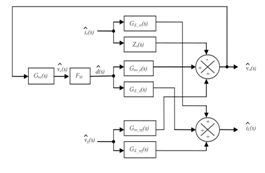
The small-signal transfer functions represented in this block diagram provide the basis for a step-by-step
design procedure
for synchronous buck converters in voltage-mode control.
|

With its ability to accept airflow from all directions,
and its increased spacing between pins, the flared
pin heat sink outperforms other heat sink styles
in natural convection cooling environments.. |
Case Study: Flared Pin Fin Heat Sink Keeps LED Light Burning Brightly
by Barry Dagan, P.E., Cool Innovations, Concord, Ontario, Canada
An inadequate cooling solution threatened to limit the performance of an LED lighting module. The aluminum extrusion heat sink that was used to cool the 65-W LED module allowed a temperature rise beyond the module’s allowed temperature limit. To improve cooling, tests were conducted on the extrusion and two pin fin heat sinks. As described in this article, a flared pin fin heat sink of similar size to the extrusion offered significantly lower thermal resistance than the extrusion and met the temperature spec of the application. Results described here may be applied to power devices that, like the LED module, require natural convection cooling. Read the full story... |
 |  |
SPECIAL SECTION
|
HOW2POWER's APEC 2010 Product Showcase
This special advertising section highlights products and services from various companies in the power electronics field. Many of these products will be on display at the Applied Power Electronics Conference and Exposition (APEC 2010), which is being held February 21-25 in Palm Springs, California. If you’re planning to attend please visit the exhibitors included in this Showcase and visit How2Power.com in booth 136. More details...
|
 Special Advertising Section |
 — POWER PRODUCTS IN 3 IMAGES OR LESS — POWER PRODUCTS IN 3 IMAGES OR LESS
|
|
| 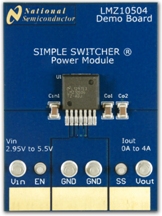
The Simple Switcher family of power modules from National Semiconductor
|
Modules Make Simple Switchers Even Simpler
 Photo: By combining buck converter silicon and a shielded inductor in a TO-style package, Simple Switcher power modules simplify the design of point-of-load power converters for medical, broadcast video, communications, industrial and military applications. Photo: By combining buck converter silicon and a shielded inductor in a TO-style package, Simple Switcher power modules simplify the design of point-of-load power converters for medical, broadcast video, communications, industrial and military applications.
Schematic: With the addition of a few external resistors and capacitors, Simple Switcher modules form a complete buck converter design.
Graph: Packaging technology used in the Simple Switcher modules results in low radiated emissions.
More details... |
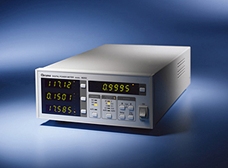
Chroma Systems Solutions’ 66200 series power meters |
Power Meters Ease Compliance with Eco-design Directive
Photo: The 66200 power meter satisfies the measurement requirements established by the Eco-design Directive for Energy-using Products.
More details... |

AEC-Q101 qualified DirectFET2 power MOSFETs from International Rectifier |
DirectFETs Are Qualified for Automotive
Photo: The AUIRF7739L2 and AUIRF7665S2 are AEC-Q101 qualified MOSFETs in the DirectFET package, which replaces the traditional plastic, overmolded package with a metal can that allows top-side cooling.
Bar Graphs: The DirectFET package reduces the thermal resistance from the die to the top of the package when compared with standard SMT packages and introduces less parasitic resistance than the standard packages.
Table: Key specs and features of automotive DirectFET2 power MOSFETs.
More details... |

Alpha & Omega Semiconductor’s
AOZ1950 white LED backlight driver
|
Driver IC Lights Up to 12 White LEDs in Series
Diagram: Optimized for backlighting of portable devices using medium-sized LCD panels, the AOZ1950 white LED backlight driver can drive up to 12 LEDs in series.
More details... |
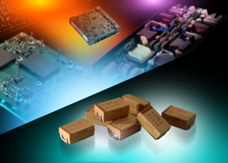
200-V and 250-V OptiMOS power MOSFETs
from Infineon Technologies |
MOSFETs Boast Lower FOM at 200 V and 250 V
Bar Graphs: Infineon claims best-in-class values for on-resistance and figure of merit for its 200-V and 250-V rated OptiMOS power MOSFETs.
Photo: The OptiMOS 200-V and 250-V MOSFETs are offered in TO-262,TO-220, SuperSO8, and D²PAK packages.
Table: Part numbers and package options for 200-V and 250-V OptiMOS power MOSFETs.
More details... |
|

 |
POWER SUPPLY JOBS & TECHNOLOGY
|
Lighting Company Takes a Shine to Power Electronics Engineers
If you prefer dealing with human resources managers who don’t have a clue about power electronics, and can’t tell a power supply designer apart from any other EE, then please stay away from Maureen Crawford. And if you’re comfortable with HR personnel who have difficulty stifling a yawn as they skim your resume, then steer clear of Crawford. She’s just going to be too interested in your resume and how you might help her company solve the next lighting-design challenge. For more on opportunities for power electronics engineers in lighting, read the rest of the story. Read the full story... |
|
 — RECOGNIZING TODAY'S POWER ACCOMPLISHMENTS — RECOGNIZING TODAY'S POWER ACCOMPLISHMENTS
|
MAGNETICS NOTES: |
On February 24, 2010 at APEC 2010 in Palm Springs, the Power Sources Manufacturers Association (PSMA) Magnetics Committee will sponsor a Special Presentation session on "Inductive Component Technology". In this session, seven industry experts will provide a broad overview of current trends, materials and design issues.
Coming in the March Issue of How2Power Today: Magnetics Madness. This special issue of the newsletter will feature articles on power magnetics design, products and services, and magnetics related engineering opportunities. For more information, click here. |
|