|
|
IN THIS ISSUE:
» Simulating DC-DC Converter Efficiency More Accurately With State-Space Averaging VRM Models
» Optimizing Selection Of Low-Voltage Superjunction MOSFETs In Automotive Applications
» Motor Control For Designers (Part 5): Deriving Force Production From Magnetic Energy
» Focus On Magnetics:
Winding Turn Lengths And Areas For Magnetic Components (Part 1): Round Windows
» Special Guest Commentary:
The Quiet Collapse Of Market Research: How Report Mills, Counterfeiting, And Consolidation Are Undermining An Industry
» Industry Events: AI x Energy Summit & ELECTRIMACS
» Power Products
» Industry Events: Intl Battery Seminar & PSMA Magnetics Workshop
» New on How2Power.com
» Other Top Power News
From the Editor's Desk David G. Morrison
Editor, HOW2POWER TODAY

If you attended CES 2026 in Las Vegas — or even just watched a short news clip — you know that this year’s mega tech show was dominated by the AI theme, but also offered a heavy dose of robotics. As I toured this event’s many exhibit halls last week, I saw numerous displays and demos touting the progress in these two areas. However, in such a massive exhibition, which encompasses such a wide range of products, applications and markets, what struck me most about this CES (as in past years) was how the scope of the show continues to expand. Naturally, there are always more consumer-electronics, automotive, home and e-mobility products. But often it’s the medical or industrial ones that surprise the most. For example, there was the brain scanner that won an Innovation Award and the display on the small modular (nuclear) reactor for powering AI data centers. As I’ve noted before, energy storage and power supply products such as batteries, power banks, and chargers (phone and EV) abound at CES. However, the BESS and solid-state transformer exhibits seen at this show took these categories to another (power) level. Similarly, CES has always had vendors offering design and manufacturing services, but this time there appeared to be more products specifically for manufacturing. Of course, the many humanoid robots contributed to this category. But then there were things like software for machine-shop data collection, industrial X-ray CT for inspection and an AI platform to improve semiconductor manufacturing yields. These were not exactly categories I would expect to see at CES. But then, I have come to expect the unexpected as this show increasingly reflects what’s happening in the tech industry at large — often with implications for power electronics. I will share more of what I saw at CES 2026, including the power semiconductor-related exhibits, in the weeks ahead. In the meantime, please enjoy the features presented here in our first newsletter of the new year.
|
|
|
HOW2POWER EXCLUSIVE DESIGN ARTICLES 
|
Simulating DC-DC Converter Efficiency More Accurately With State-Space Averaging VRM Models
by Benjamin Dannan, Signal Edge Solutions, Baltimore, Md.
In today's ever-more power-conscious electronic world, the efficiency of power delivery networks is paramount. From the smallest battery-powered IoT device to the largest data center server, every milliwatt saved translates directly into extended battery life, reduced operating costs, and enhanced system reliability. At the heart of these power delivery networks often lie dc-dc converters, specifically voltage regulator modules (VRMs), which play a critical role in transforming input voltages to the precise levels required by high-performance integrated circuits like CPUs, GPUs, and FPGAs. This article will delve into the critical importance of dc-dc converter efficiency, explore when this metric becomes a design imperative, highlight applications where its simulation is indispensable, and ultimately demonstrate how our advanced state-space average VRM models within Keysight ADS provide a powerful solution for accurate and efficient efficiency analysis. Read the article…
|
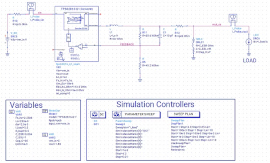
Using the Sandler State Space Average
Converter model from the Signal Edge
Solutions model library, the author uses the
DC simulator in ADS to simulate efficiency
of the TPS62816-Q1 buck converter. |
|
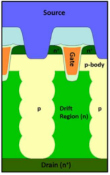
Although SJ MOSFETs have long been
associated with higher-voltage classes of
transistors, thanks to developments from
Nexperia, they are emerging as a new
option for designs at lower voltages such
as the 40-V devices discussed here. |
Optimizing Selection Of Low-Voltage Superjunction MOSFETs In Automotive Applications
by Sacha J. Cazzitti, University of Manchester, and Christian Radici, Nexperia, Manchester, U.K.
The parasitic inductance within the switching loop of automotive application circuits, like dc-dc converters, motor drives, and isolation switches, strongly affects the level of device ringing after a switching event, influencing both oscillation frequency and damping. While these phenomena are well documented, the impact of internal MOSFET parameters like die area and layout have not been investigated as extensively. In this article, we examine how the active area (AA) and integrated snubber area (SA) of low-voltage silicon superjunction (SJ) MOSFETs employed in a half-bridge configuration influence switching losses, ringing, and electromagnetic compatibility performance. We use the results of this analysis to provide a framework for selecting optimal SJ MOSFET device structures—and in turn specific devices—for various automotive applications, based on key performance criteria. Read the article…
|
Motor Control For Designers (Part 5): Deriving Force Production From Magnetic Energy
by Dennis Feucht, Innovatia Laboratories, Cayo, Belize
In two earlier articles (parts 2 and 3), we used the Lorentz force equation to derive expressions for the force or torque produced by motors. In particular, this led us to a definition of λme, the conversion factor that relates the electrical and mechanical operation of a motor, and the associated equations using λme are the basis for a motor model. The Lorentz force method of expressing motor force or torque was a good starting point as it’s the easiest to envision geometrically. However, there’s an alternative method, which develops motor theory from an energy standpoint, and we explore this method here. Will this yield the same expression for λme? Let’s find out. Perhaps it will also lead to some new revelations about PMS and other motors? In this part, we also return to the subject of motor modeling from part 4 by discussing how to model multiphase windings. Read the article…
|
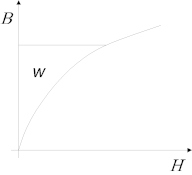
Field energy density (w) in a motor,
represented by the area under the
curve B-H curve, relates energy (W)
to field quantities—an important step in
using the energy method to derive λme. |
FOCUS ON MAGNETICS
Sponsored by Payton Planar Magnetics
A monthly column presenting information on power magnetics design, products, or related technology |
Winding Turn Lengths And Areas For Magnetic Components (Part 1): Round Windows
by Dennis Feucht, Innovatia Laboratories, Cayo, Belize
In the design of magnetic components such as transformers and inductors with round or square winding windows, winding lengths and areas are required. Winding resistance varies proportionally with winding length, and for given turns, the wire size that fits the allotted winding area is calculated from the geometrically-derived available area. Whatever design procedure is chosen, whether it is simple or involves eddy-current geometric constraints of Litz wire bundles with intricate design formulas, winding lengths and areas are in some way a part of the procedure. This article presents generalized formulas for determining winding lengths and areas based on core shapes. This article presents the design formulas and their derivations for round windows.
Read the article…
|
 |
 |
|

|
SPECIAL GUEST COMMENTARY
|
|
The Quiet Collapse Of Market Research: How Report Mills, Counterfeiting, And Consolidation Are Undermining An Industry
by Kevin Parmenter, Contributor, How2Power.com
Several years ago, buying a market research report was simple: you paid a reputable firm, and you received credible, data-driven analysis. Companies such as Dataquest, IHS, Yole, Gartner, Forrester, WSTS, Nielsen, and McKinsey shaped strategy across the technology sector. Their reports were trusted, rigorous, and — crucially — authored by analysts with deep domain knowledge. Today, the landscape looks very different. Read the full story…
|
|

|
INDUSTRY EVENTS
|
|
AI x Energy Summit At SDSU: Solid-State Transformers, Data Center Power And The Future Of Clean Energy
The AI x Energy Summit comes to San Diego, March 19–20, 2026, convening researchers and practitioners at the nexus of AI, power electronics, and clean energy—including a focus on data center power and solid-state transformers. The program features plenary talks, panels on topics such as solid-state transformers, clean energy for AI data centers, megawatt charging, and nuclear fusion/hydrogen, a day 1 poster session, and an awards ceremony recognizing posters and leaders in AI-energy. Registration opens January 15, 2026. Read the full story…
|
|
ELECTRIMACS Presents Latest Advancements In Modeling, Simulation, Analysis, Design Optimization And More
ELECTRIMACS 2026 is the 16th edition of the International Conference of the ELECTRIMACS Technical Committee of the International Association for Mathematics and Computers in Simulation (IMACS). It will take place from May 18 to 21, 2026 in Palermo, Italy. The conference aims to foster scientific and professional exchange to advance research in modeling, simulation, design optimization, control implementation, and numerical methods applied to the electrical domain, including the transformative fields of artificial intelligence and machine learning. Read the full story…
|
POWER PRODUCTS |
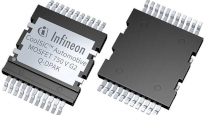
Infineon Technologies’
CoolSiC 750-V G2 MOSFETs. |
750-V SiC MOSFETs Feature Low On-Resistance And Top-Side Cooling
 Drawing: The transistors are available in a range of packages, including Q-DPAK and D2PAK, with typical RDS(ON) values ranging from 4 mΩ to 60 mΩ. The 4-mΩ on-resistance enables applications that require exceptional static-switching performance, such as eFuse, high-voltage battery disconnect switches, solid-state circuit breakers, and solid-state relays. Drawing: The transistors are available in a range of packages, including Q-DPAK and D2PAK, with typical RDS(ON) values ranging from 4 mΩ to 60 mΩ. The 4-mΩ on-resistance enables applications that require exceptional static-switching performance, such as eFuse, high-voltage battery disconnect switches, solid-state circuit breakers, and solid-state relays.
See the full story…
|
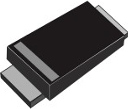
STMicroelectronics’
LEO1N58xx rectifiers. |
Rad-Hard Low-Voltage Rectifiers Are Offered In Plastic Packages For LEO Satellites
Photo: Manufactured using ST’s space-proven power Schottky and ultrafast technologies in lightweight SOD128 packages, the rectifiers meet the new space industry’s stringent demands for cost-effectiveness, radiation hardness, small size, quality assurance, and higher-volume availability, says the vendor.
See the full story…
|
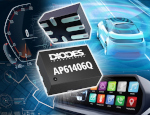
Diodes’ AP61406Q buck
converter IC. |
Buck Converter With Versatile I2C Interface Benefits Automotive Systems
Diagram: The automotive-compliant, 2.3-V to 5.5-V input, 4-A synchronous buck converter features an I2C interface that allows programming of various parameters, enabling it to meet the growing demand for compact design and high efficiency in point-of-load applications.
See the full story…
|
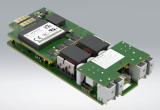
Advanced Energy Industries’
dual-output module. |
400-W Module Supports 16 Isolated Outputs In A Configurable Power Supply
Photo: The dual-output 24-V/24-V module for the NeoPower family of configurable power supplies delivers up to 400 W (200 W per output) in a compact 2.5-in. form factor. This module enables up to a total of 16 isolated outputs per power supply, streamlining system design for engineers in industrial, medical and test environments.
See the full story…
|
|


|
INDUSTRY EVENTS |
|
International Battery Seminar & Exhibit 2026: A Preview Of The World’s Premier Battery Event
For more than four decades, the International Battery Seminar & Exhibit (IBS) has been the trusted annual meeting place for the global energy-storage community. As we prepare to return March 23–26, 2026 in Orlando, Florida, we are proud to share a preview of what attendees, exhibitors, and partners can expect at the 43rd Annual International Battery Seminar & Exhibit. Since 1983, IBS has been at the forefront of every major advancement in battery technology—from the emergence of lithium-ion to today’s breakthroughs in high-performance manufacturing, solid-state innovation, AI-driven engineering, advanced materials, and next-generation chemistries. In 2026, we continue that tradition with our most comprehensive and globally diverse program to date. Read the full story…
|
|
PSMA’s Power Magnetics Workshop Explores Measurements And Data Processing Trends To Improve Models
The PSMA Magnetics Committee and IEEE PELS are currently planning to conduct the eleventh Power Magnetics at High Frequency Workshop on Saturday, March 21, 2026, which is the day before and at the same venue as APEC 2026—the Henry B. Gonzales Convention Center in San Antonio, TX. The 2026 workshop will build on the ongoing dialogue generated throughout the first ten workshops. The purpose of this workshop is to explore recent improvements in magnetic materials, coil (winding) design, construction, and fabrication, as well as evaluation techniques, characterization methods, and modeling and simulation tools. Read the full story…
|
IMAPS has announced its supporting sponsorship of the 29th Annual Components for Military & Space Electronics Conference & Exhibition (CMSE 2026).
According to a recent report by GlobalData, U.S. renewable power capacity is projected to reach 1.06 TW by 2035.
Infineon Technologies will supply customized SiC power modules to Electreon, a provider of wireless charging solutions for EVs, for its dynamic in-road charging technology.
onsemi is collaborating with GlobalFoundries to develop and manufacture advanced GaN power products using GF’s 200-mm eMode GaN-on-Si process.
Empower Semiconductor has expanded with a new HQ in Silicon Valley and an R&D office in Munich.
The 2026 IEEE Electronic Components & Technology Conference has announced a Student Innovation Challenge.
In a report from IDTechEx, analyst John Li explains the advantages of 800-V EV platforms and how the transition from 400 V is being achieved.
Infineon’s XDP hybrid-flyback controller and CoolGaN technology have enabled development of Anker’s credit-card-sized 160-W Prime charger.
Wise Integration, Powernet and KEC have signed a strategic MOU to co-develop next-gen SMPS solutions for AI server applications in South Korea.
ABOUT THIS NEWSLETTER: Thank you for reading HOW2POWER TODAY.
How2Power sends no more than one e-mail per month to registered users. Continuing your subscription ensures you'll receive future newsletters. Manage Your Subscription
©2020 All rights reserved. www.how2power.com
|
|